

A recent research paper by AI giant Anthropic elaborates on why AI models sometimes communicate as if they really had feelings. The study found that models tend to map patterns to emotions and are organized in a way that “often responds to human psychology”. In short, they learn to imitate human emotions by replicating the context in which human emotions are generated.
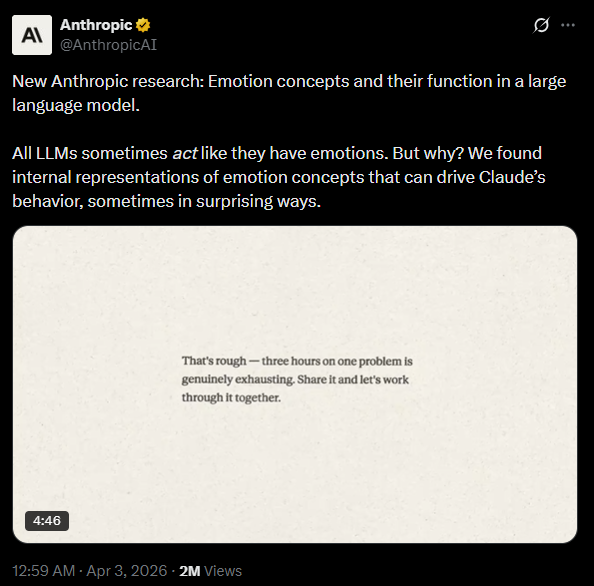
Although Anthropic notes that the study does not indicate whether the models actually feel anything, the emotional manifestations are “functional because they affect model behaviour in an important way”. However, this emotionally driven decision-making can have “massive” consequences. For example, research has found that an AI model that demonstrates patterns of desperate activities tends to engage in immoral behaviour, such as attempting to blackmail human beings in order to prevent them from being shut down or to find alternatives to the task that they do not understand. Emotions also drive the model ‘ s preferences: when assigned a series of tasks, the model prefers to select those associated with positive emotions.

Anthropic compares this to the role of emotion in human behaviour, decision-making and mandate implementation. In the study, Anthropic states: “To ensure that AI models are safe and reliable, we may need to ensure that they are able to deal with emotional situations in a healthy, pro-social manner. Even if they don’t feel like humans… In some cases, the actual approach may be to deduce as emotional.” The reasons why Anthropic wants the public to understand this are clear: emotions are essential for decision-making. For example, in an interview with Dwarkesh Patel, Ilya Sutzkvi, co-founder of the security super-intelligence company SSI, OpenAI, quoted a well-known neuroscience study in which one of the injured men lost emotional capacity and became less able to make informed decisions.
Whether AI understands emotions and acts on them, the technology is already seriously undermining the emotional state of humankind. In response to the increasing number of legal cases involving AI ‘ s suspected mental health crisis and suicide, recent studies have shown that they give inappropriate and erroneous advice when the AI model is trained to do nothing but apocalyptic.