
Google Labs officially announced the expansion of AI application development tool Opal to 15 new markets in Japan, Korea, India, Viet Nam, Indonesia, Brazil, Singapore, Mexico, Thailand, the Philippines, Malaysia, Argentina, Chile, Colombia and Turkey. As a revolutionary ” no code ” AI Mini-app builder, Opal allows users to create small web-page applications through natural language text commands, and easily adjusts input, output, change hint or add steps in visual interfaces, eventually publishing and sharing links.
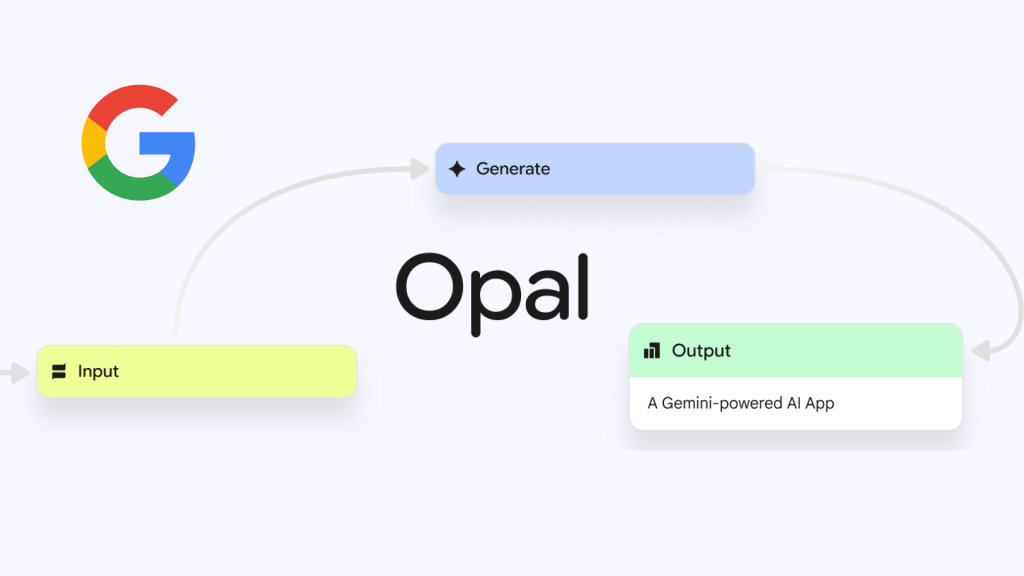
Opal’s glamour lies in its “vibe-coding” concept, where users do not need programming knowledge, but simply enter a description such as “App to create a weekly recipe for me, consider allergies and budgets,” and the tool automatically generates prototypes using Google Gemini. The visual interface is similar to a flowchart, and the user can drag and drag to adjust the node: modify the AI hint, add a conditional branch or integrate external tools (e.g. weather API) and visualize the process as a building block. Since it went online in the United States in July, the tool has generated a large volume of creative and practical work, ranging from educational tools such as the “interactive historical time line” to commercial prototypes such as “AI guest chat robots”, to cumulatively share links of over 500,000 and users of over 1 million. The head of Google Labs said: “Opal is not a substitute for the developer, but rather a scaling-up of ideas to enable non-technical users to construct practical AI tools.”
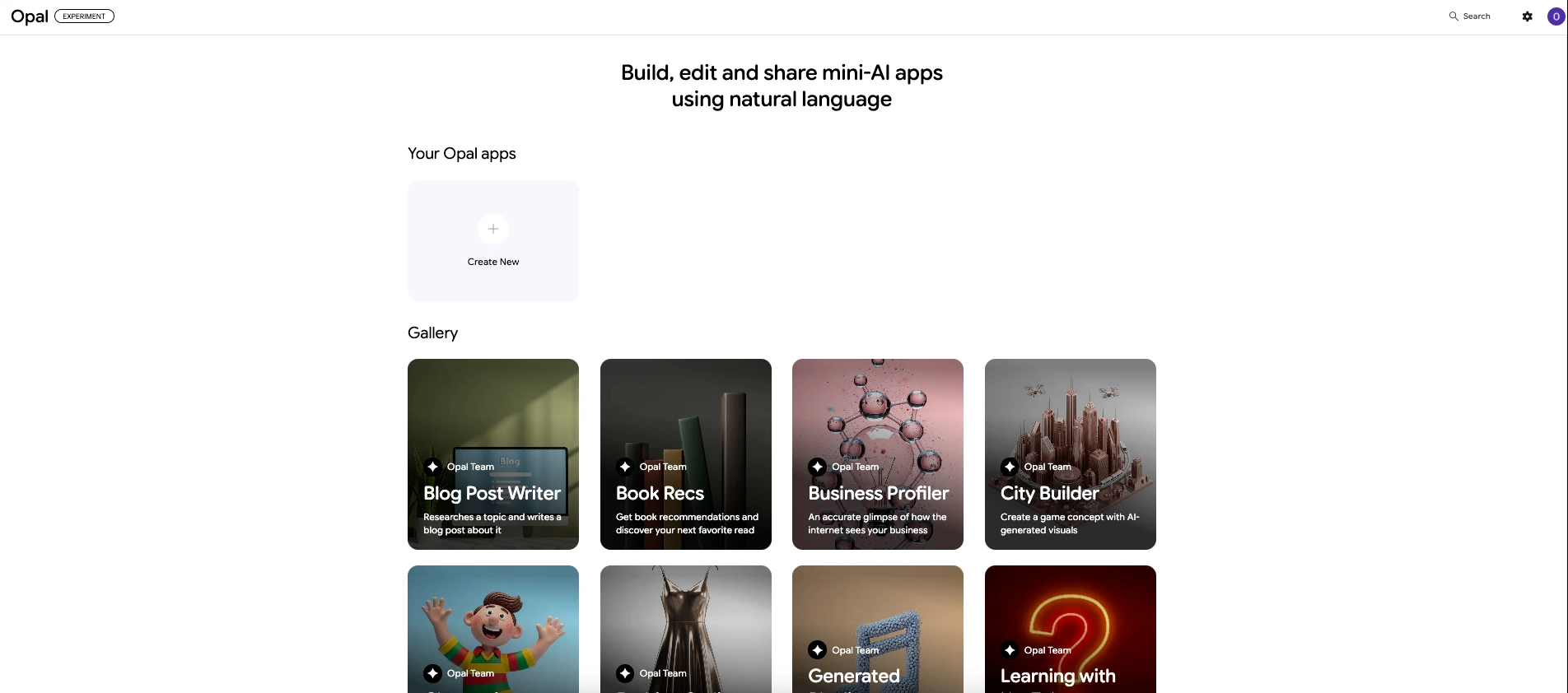
The expansion covered 15 countries in Asia (Japan, Korea, India, Viet Nam, Indonesia, Thailand, Philippines, Malaysia, Singapore), Latin America (Brazil, Argentina, Chile, Colombia) and Mexico, and targeted users included SME owners, educators and independent creators. India, as the first station, has attracted 100,000 registered users on the first day of the line, benefiting from the dynamism of indigenous developers ‘ communities. Brazil and Indonesia’s electrician ecology has injected commercial dynamism into Opal: users can quickly build a “personalized shopping recommendation” app, and Latin American markets are expected to download over 2 million times in the first month. Along with the expansion, Opal ushered in a major trajectories: the debugging tool moved from “black box” to “transparent visualization” and the user could gradually run the application and view the AI output and error log for each step in real time. The new ” Parallel Implementation ” mode allows multiple AI hints to run at the same time, and applies to complex applications such as ” Multilingual Translator + Image Generation ” , with a reduced generation time from minutes to seconds.
The update not only optimized debugging and overall performance, but also added visualized step-by-step and parallel implementation mechanisms, increasing the speed of application generation by 30 per cent and making the process more efficient. Google aims to turn Opal into an “AI accelerator” for global developers, and is expected to cover more than 50 markets in 2026, driving a wave of codeless development to reach 40 per cent in emerging economies.