
According to Reuters, the new Prime Minister of Thailand, Anutin Xavila Army, has unequivocally rejected the scheme to legalize the lottery pursued by the former Government. On 5 September, ANA succeeded Petuntan Sinawa as Prime Minister, ending a week-long power vacuum in Parliament. Last week he publicly stated that Thailand wanted to welcome the first legitimate casino resorts “at least until he left”.
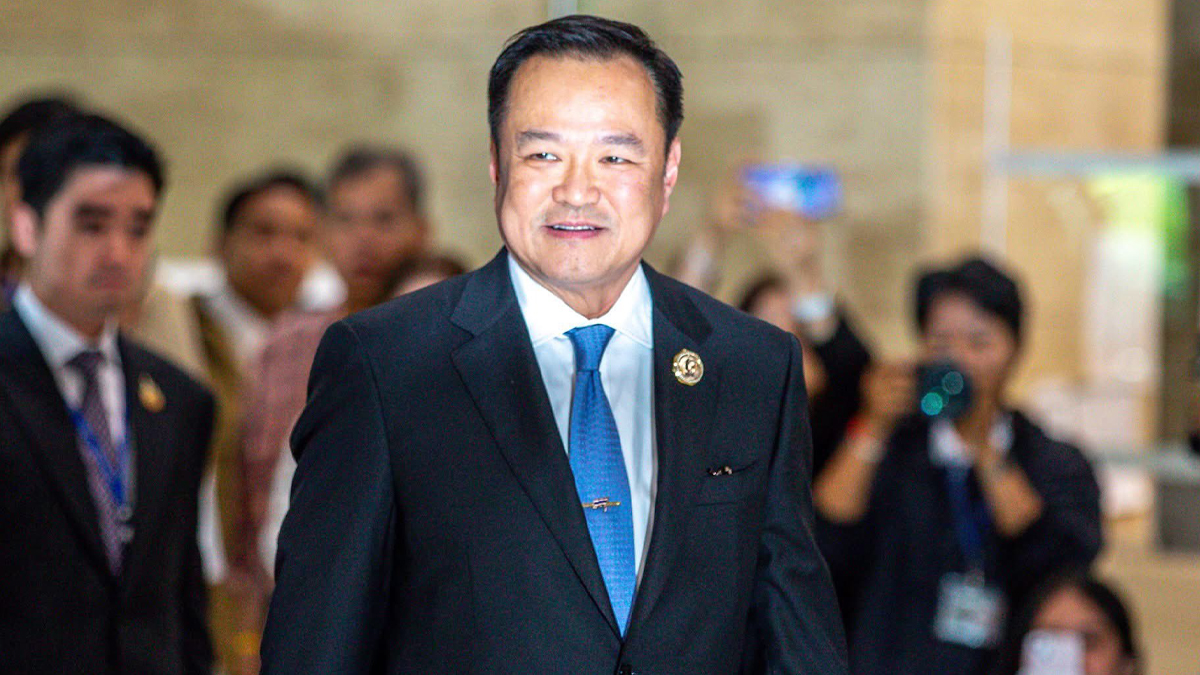
(Annutin Xaviera Army)
The gaming liberalization programme, supported by former Prime Minister Petuntan Shinawatra and his predecessor, Seta Hue, was seen as an important means of stimulating the economy through tourism (especially from the Chinese market) and international investment. Opposition groups, such as the Anutin Sanhuila Army, have warned that the plan could be counterproductive, claiming that if the Entertainment Complex Act was passed, the State would be prohibited from betting “a substantial reduction in the scale of tourism, trade and investment to Thailand”.
The Thai Entertainment Complex Bill was approved in principle by the Cabinet on March 13, but the process has been delayed and its content is controversial in Thai society. In July, the Thai House of Representatives voted overwhelmingly to approve the Cabinet withdrawal of the Integrated Recreation Act, one of the core policies of the Government of Petuntan Sinawa, which has now been put on hold because of concerns of the Ministry of Finance and the “widespread social impact” mentioned by the Government spokesman.
The Army also further demarcated the line with gambling reform by opposing the recategorization of poker as a sports project and maintaining the decades-old card game restrictions. It is worth mentioning that Thailand recently lifted the poker ban to open up regulated international competitions: On 23 July, the Thai Sports Agency approved the inclusion of poker as a registered sports project, and on 30 July, the Ministry of the Interior abolished a gambling licence rule, which included a ban on card games such as poker, as established in 1958.
The Anutin Vavila Army revealed its opposition to the classification of poker as a sports project during its tenure as Minister of the Interior in June. With his return to the Ministry of the Interior, Poker ‘ s sporting status may face re-examination. He had consistently stressed that gambling should not be used as an economic stimulus, although the industry involved a potential investment of $42 billion, a position that marked a complete departure from Thailand ‘ s casino development policy and from the former Government.

Earlier this year, the Chief Executive Officer for Recreation in New Ziboa, Ho Zilong, called Thailand’s emerging lottery market “the opportunity of the century”. The company had planned to open a casino resort after the landing of the new regulatory framework in Thailand, but it is now evident that it will not be able to do so, at least during the term of the Anutin Vavila Army.
After his election, the Anutin Xinwira Army promised to hold new elections to form a Government, adding additional variables to the future of Thai gambling policy. The rapid reversal of the policy highlights the fact that Thai gambling regulation is still affected by political instability — progress in the legalization of casinos by successive governments has been undermined by changes in leadership.